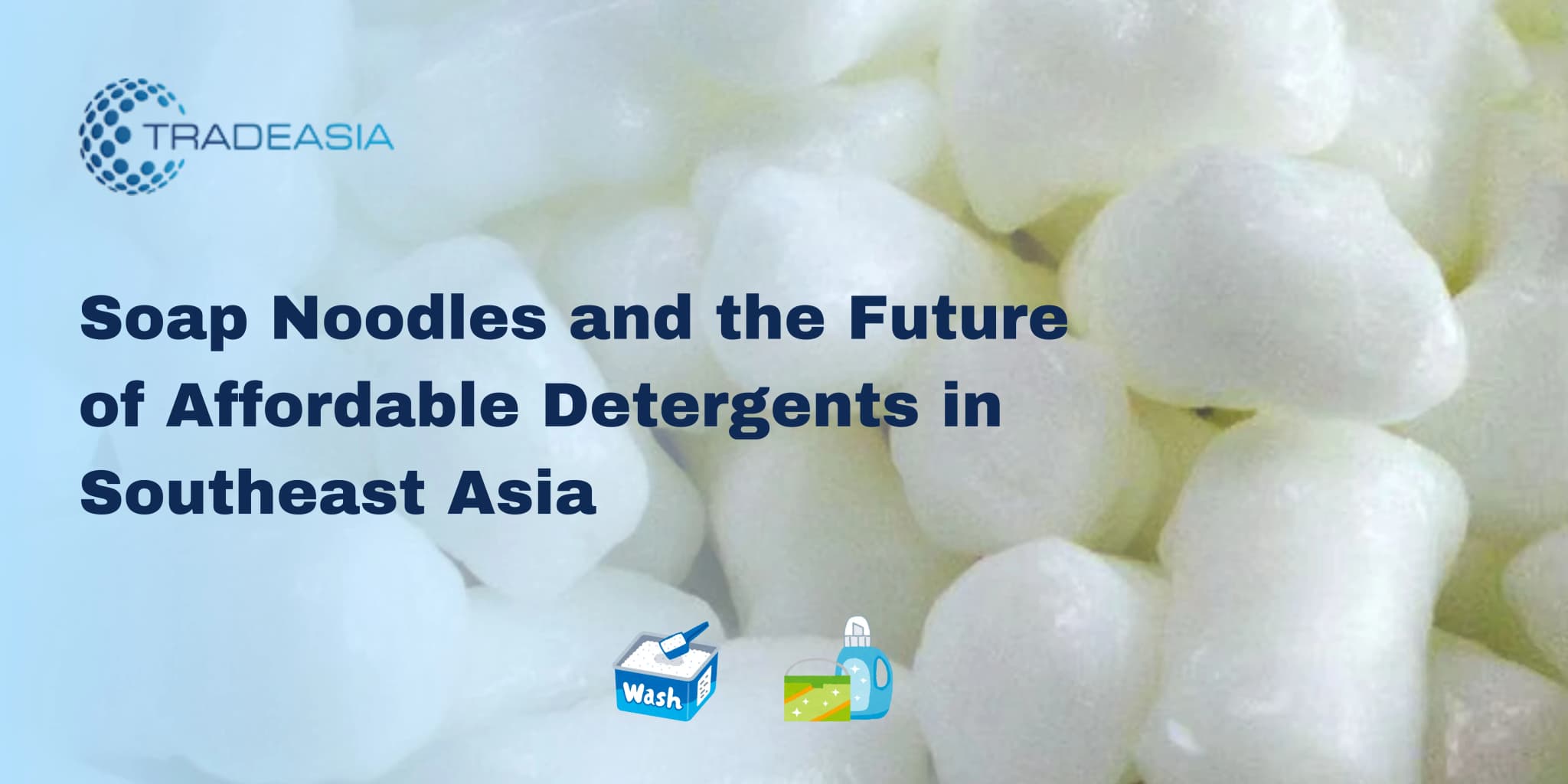
In a region marked by rapid population growth and urbanization, Southeast Asia is experiencing an explosion in demand for affordable, effective, and safe household cleaning products. The foundation of this growth lies in a key raw material soap noodles. These fatty acid-based compounds are enabling the production of cost-efficient detergent bars and laundry soaps that serve both low- and middle-income households. In this article, we explore the chemical composition, production origins, cost dynamics, environmental footprint, market trends, and future outlook of soap noodles in Southeast Asia’s detergent industry.
What Are Soap Noodles?
Soap noodles are the intermediate form used to manufacture finished soap and certain detergent products. They are typically made by saponifying fatty acids or triglycerides using sodium hydroxide, forming a base product that can be remolded and customized.
Common Feedstocks:
-
Palm Oil (RBDPO)
-
Palm Kernel Oil (PKO)
-
Tallow (animal fat)
-
Coconut Oil (CNO)
The most common commercial blend is 80:20 (palm oil:palm kernel oil) due to its optimal balance of cleansing power, hardness, and foaming.
Why Southeast Asia Relies on Soap Noodles
Southeast Asia comprising Indonesia, Malaysia, Thailand, Vietnam, and the Philippines is one of the largest producers and consumers of soap noodles globally.
Key Drivers:
-
Abundant palm oil resources, especially in Indonesia and Malaysia
-
Export-oriented oleochemical industry
-
Strong demand from mass-market detergent manufacturers
-
A push toward low-cost personal and laundry care products
The affordability and availability of vegetable oil-based soap noodles make them the preferred choice for detergent bars widely sold in traditional markets and retail chains across the region.
Soap Noodles in Detergent Bar Formulation
While traditionally associated with personal care soaps, soap noodles are also a base for laundry detergents, especially in rural and lower-income urban segments.
Role in Detergents:
-
Builder: Enhances surfactant performance by softening water
-
Alkalinity Adjuster: Helps with stain removal by boosting pH
-
Foaming Agent: Increases the lathering feel, important in hand-wash markets
-
Binder: Holds together other powdered detergent ingredients
Formulators in Asia often blend soap noodles with sodium carbonate, zeolites, surfactants, and enzymes to create hybrid detergent bars tailored to consumer habits.
Cost Advantage and Economic Relevance
In developing economies like Indonesia, Vietnam, and Myanmar, soap noodle-based detergents represent a cost-saving alternative to liquid and powder detergents due to:
-
Lower packaging and transportation costs
-
Longer shelf life in bar form
-
Reduced water content, leading to lower distribution weights
-
Use of inexpensive, locally sourced raw materials
According to Grand View Research, the global soap noodles market is expected to surpass USD 1.4 billion by 2030, with Southeast Asia contributing a major share due to its detergent exports.
Sustainability in Soap Noodle Production
Environmental concerns around palm oil cultivation have pushed many manufacturers to switch to RSPO-certified palm-based feedstocks. This move helps reduce:
-
Deforestation-linked sourcing
-
Carbon emissions from plantation operations
-
Social conflicts in land acquisition
Many Southeast Asian manufacturers are investing in:
-
Green refining processes
-
Zero-effluent discharge systems
-
Traceability in palm oil supply chains
Key Manufacturing Hubs in Southeast Asia
|
Country |
Major Players |
Production Focus |
|
Indonesia |
Wilmar, Musim Mas, Tradeasia |
80:20, 70:30, custom blends |
|
Malaysia |
KLK OLEO, IOI Corp, Sime Darby Oils |
High-grade RSPO soap noodles |
|
Thailand |
Lion Corporation, OLEON Thailand |
Laundry soap base |
|
Vietnam |
Lix Detergent, Netco |
Domestic bar soap production |
Distribution and Logistics in Singapore
Although Singapore does not produce soap noodles, it serves as a strategic transshipment hub for:
-
Importing bulk soap noodles from Indonesia or Malaysia
-
Re-exporting to India, the Middle East, and East Africa
-
Supplying local contract manufacturers and private label brands
Bulk shipments arrive in:
-
Jumbo bags (1000kg)
-
25kg paper/poly bags
-
Container-loads of flakes or noodles
Storage is typically handled in Tuas and Jurong logistics zones, where temperature and humidity are controlled to prevent oxidation or clumping.
Market Trends and Innovation
-
Multi-Purpose Detergent Bars
Brands are innovating with multi-action soap bars used for dishwashing, laundry, and even surface cleaning especially in rural markets. -
Bio-Enzymatic Additives
Manufacturers are adding enzymes and natural fragrances to soap noodle formulations to improve wash quality while keeping prices low. -
Plastic-Free Packaging
Sustainable packaging is becoming a consumer expectation, particularly in urban areas.
Challenges to Watch
-
Price volatility of palm oil, which directly impacts feedstock cost
-
Trade restrictions or export bans on palm derivatives
-
Rising pressure for sustainable certification
-
Competition from synthetic surfactants in the liquid detergent sector
To stay competitive, detergent manufacturers are adapting with hybrid soap-surfactant systems and better formulation engineering.
Conclusion
Soap noodles are more than just a raw material, they are a strategic enabler of affordable hygiene across Southeast Asia. Their role in detergent bar manufacturing continues to grow as the region seeks cost-effective, environmentally sound, and locally sourced chemical solutions.
In a future defined by sustainability, price sensitivity, and rapid urbanization, soap noodles will remain central to the evolving detergent landscape of ASEAN markets.To learn more about sourcing high-quality soap noodles for affordable and sustainable detergent production in Southeast Asia, contact our team here.