
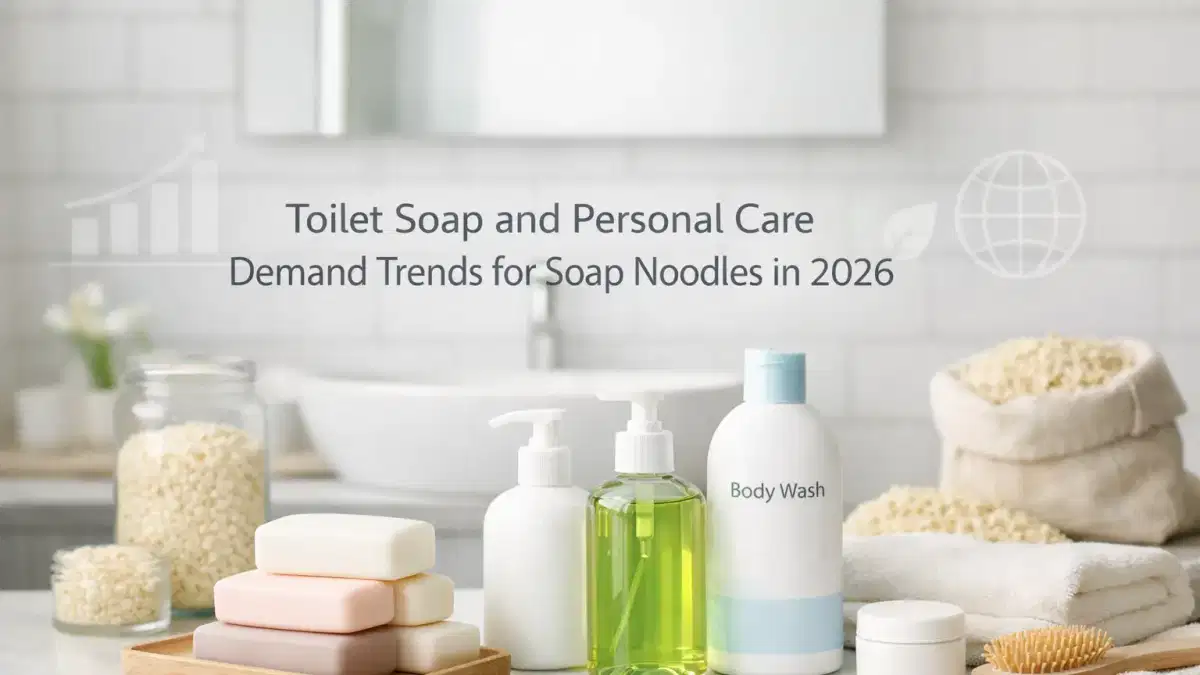
Soap noodles demand in 2026 is being shaped by a simple reality: bar soap remains a daily essential in many countries, while personal care brands keep raising the bar on quality, claims, and certifications. For B2B buyers, this means the market is no longer driven only by “more volume.” It is also driven by which bar soaps are growing (value, premium, sensitive-skin, certified) and where production is scaling (emerging markets and export hubs).
Industry forecasts still point to steady expansion in the broader soap and detergents space into 2026, supported by hygiene habits and population growth. The implication for procurement is clear: soap noodles remain a core input, but supplier selection in 2026 increasingly depends on consistency, certification readiness, and cost control.
What soap noodles are and why they still matter
Soap noodles are semi-finished pellets made from saponified oils and fats (commonly palm oil and palm kernel oil, sometimes tallow or coconut derivatives depending on the grade). Manufacturers buy noodles so they can skip in-house saponification and focus on finishing: blending fragrance, color, functional additives, then extruding and stamping bars.
That “standard soap base” role is exactly why noodles remain widely used across:
- Mass-market toilet soap
- Beauty and specialty bars
- Medicated and antibacterial bars (where allowed and properly registered)
- Some hybrid cleansing bars where soap is part of the base
In 2026, buyers are paying more attention to noodle specs (TFM, color, moisture, free alkali) because finished-bar quality targets are tighter, especially in export and premium segments.
2026 toilet soap demand: volume growth continues, but it is uneven
Population growth and hygiene habits keep the floor strong
Bar soap demand in many developing markets continues to rise because basic usage is still expanding through distribution reach, affordability, and public health habits that stuck after the pandemic. Even when consumers trade down, soap tends to stay in the basket because it is a low-cost necessity.
Urbanization favors packaged, branded bar soap
Urban consumers generally shift toward packaged and branded products sold through modern retail and convenience channels. That supports higher production runs for mainstream toilet soap, which typically depends on palm-based noodles due to economics and performance.
Personal care is changing what buyers want from soap noodles
Premiumization is real, and it changes specifications
Premium and “beauty soap” growth pulls demand toward higher-grade noodles that deliver a smoother feel, stable fragrance performance, and consistent appearance. Even in price-sensitive markets, brands often launch premium sub-lines, and contract manufacturers need the right base to meet claims.
Mildness and skin-friendly positioning is pushing reformulation
More brands want bars that feel less drying and more “skin conditioning.” Practically, this increases demand for:
- Better deodorization and lower odor carryover
- Lower free alkali and tighter moisture control
- More consistent fatty acid performance (lather, hardness, wear rate)
- Vegetable-based noodles also remain preferred for vegetarian positioning and market compatibility in many regions.
Sustainability and compliance are moving from “nice to have” to “required”
For export-facing manufacturers and multinational supply chains, certification and traceability are now procurement filters, not marketing extras.
RSPO and supply chain models matter
Many buyers increasingly ask for RSPO claims (Mass Balance, Segregated, and other models depending on customer requirements). RSPO’s supply chain certification framework formalizes these models and how they are controlled through the chain.
Deforestation due diligence pressure is rising
The EU’s deforestation regulation framework covers commodities including oil palm and soya, with due diligence expectations that can affect downstream buyers and documentation needs. If your soaps (or your customers’ soaps) go into the EU, your noodle sourcing story matters more in 2026 than it did a few years ago.
Bottom line: even when total noodle volume grows steadily, the mix shifts toward certified, traceable, audit-ready supply.
Product type trends that shape purchasing in 2026
White vs natural noodles
- White (“snow white”) noodles dominate toilet soap and beauty soap because they support consistent finished-bar color, fragrance clarity, and premium appearance.
- Natural or unbleached noodles remain common in laundry and economy bars, and they also appeal to some “rustic” or minimal-processing branding. Large-scale FMCG lines still prefer tight color and odor control, so white grades typically lead in export and premium demand.
High TFM demand is rising in premium segments
Higher TFM is closely tied to perceived quality and performance. As premium bars grow, buyers increasingly lock in high-TFM noodle specs to protect bar feel, lather, and durability. This does not remove demand for lower grades (especially for economy soap), but it shifts incremental growth toward higher-value noodle types.
Cost pressure and price sensitivity
Even with premium branding, bar soap remains extremely competitive. Raw material exposure, especially to palm and palm kernel markets, continues to dictate short-term pricing.
When feedstock costs rise sharply, manufacturers typically respond with a mix of pricing actions, pack-size strategy, and careful reformulation rather than sacrificing volume. In many markets, price changes happen in steps because demand is sensitive, especially for mass products.
For buyers, the practical 2026 playbook usually includes:
- Blending contracts and spot buying (to manage volatility)
- Multi-origin supply options (to reduce policy and logistics risk)
- Clear specs and COA discipline (to reduce rework and rejects)
- Planning inventory around freight lead times and peak season demand
What this means for soap noodle buyers in 2026
If you are sourcing soap noodles for toilet soap or personal care, 2026 procurement tends to reward buyers who treat noodles as a performance input, not just a commodity line item.
Focus areas that reduce total cost of ownership:
- Consistency: stable TFM, moisture, and color across lots
- Certifications: RSPO options, halal where needed, and traceability readiness
- Application fit: noodle grade aligned to bar positioning (economy vs premium vs sensitive-skin)
- Logistics reliability: predictable lead times, packing suitability, clear documentation
Conclusion
Soap noodles remain a foundational ingredient for toilet soap and personal care growth in 2026 because bar soap demand continues in high-population, fast-urbanizing markets, while premium personal care expands the need for better-performing bases. The winners in procurement will not be the teams that chase the lowest spot price, but the teams that lock in reliable specs, protect supply continuity, and stay ahead of sustainability documentation.
If you want to secure soap noodles that match your target bar quality (white grades, high TFM, or certified sourcing) while keeping supply stable across regions, Chemtradeasia can support your procurement with suitable grades, documentation alignment, and export-ready supply coordination. Share your target market, certification needs, and monthly volume, and the team can help shortlist the right specifications and sourcing options for 2026.