Soda ash light (sodium carbonate, Na2CO3) is a critical builder in powdered detergent formulations, where its rapid dissolution, water-softening function, and alkalinity control are essential to product performance. In Southeast Asia, detergent manufacturers ranging from multinational giants to fast-growing local producers are systematically increasing procurement volumes in 2026, driven by rising consumer demand, washing machine penetration, and a regional manufacturing expansion that shows no sign of slowing.
Application of Soda Ash Light for Detergent Manufacturers
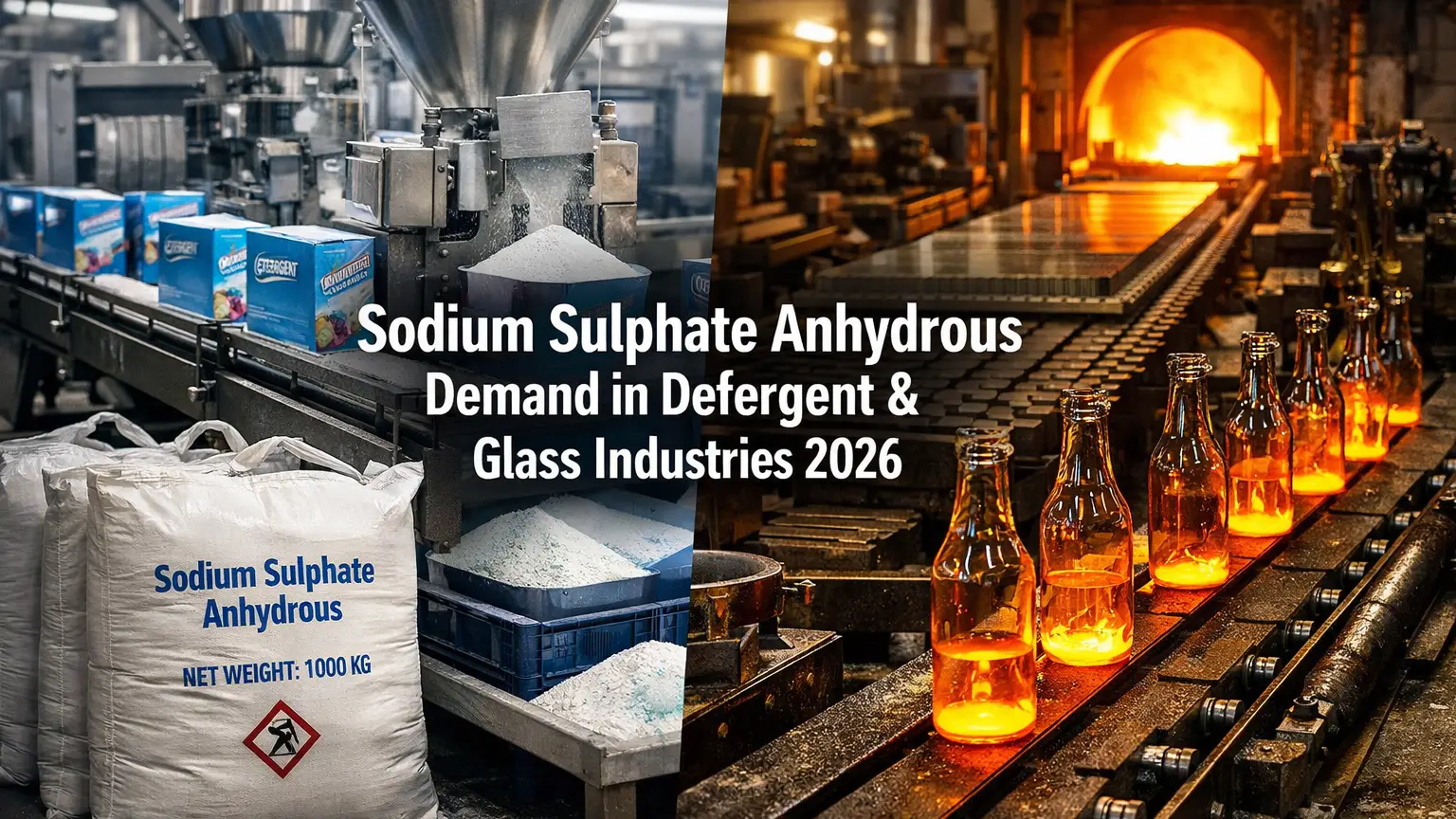
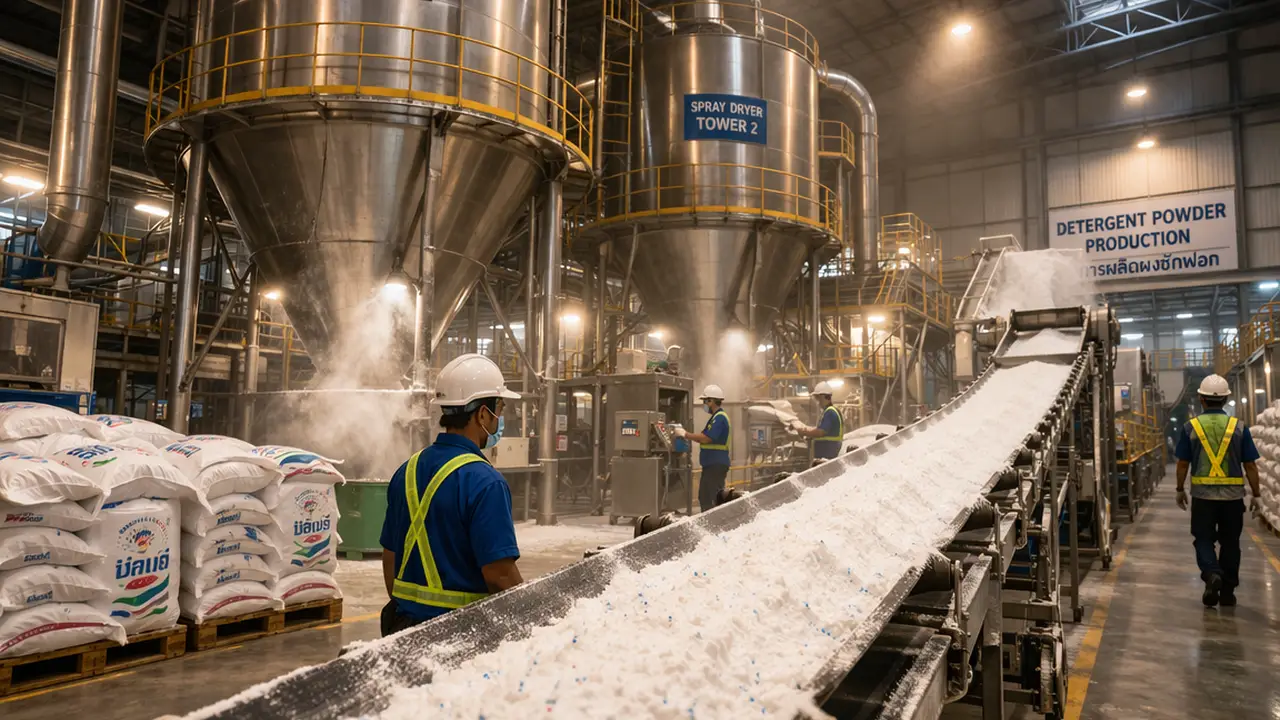
Soda ash light is the preferred grade of sodium carbonate for the detergent industry, valued for its fine particle size, high solubility, and ability to absorb liquid surfactant ingredients during spray-drying. Dense soda ash cannot support this process effectively. Across Southeast Asia, structural forces including rapid urbanization, middle-class income growth, and expanded retail distribution are compounding demand for powdered and blended detergent products that rely directly on this raw material. While glass remains the largest single consumer of soda ash globally, it predominantly uses the dense grade; for detergent-focused buyers across Indonesia, Vietnam, the Philippines, Thailand, and Malaysia, soda ash light is the functional and commercial standard.
Core Applications of Soda Ash Light
| Application | Sector | Demand Share (Global) | Trend | Buyer Type |
|---|---|---|---|---|
| Powdered laundry detergent | Household & commercial cleaning | ~15–18% | Growing ↑ | Detergent manufacturers |
| Industrial cleaning compounds | Food processing, hospitality, healthcare | ~5–7% | Growing ↑ | Industrial formulators |
| Textile processing | Dyeing, scouring, finishing | ~5–7% | Stable → | Textile mills |
| Water treatment | Municipal and industrial | ~4–6% | Stable → | Utilities, industrial plants |
| Chemical synthesis | Sodium silicates, sodium bicarbonate | ~8–10% | Stable → | Specialty chemical producers |
| Flat & specialty glass | Construction, solar, automotive | ~50% (dense grade dominant) | Growing ↑ | Glass manufacturers |
Note: Glass demand is globally dominant but primarily uses dense soda ash. For light-grade buyers in Southeast Asia, detergent manufacturing represents the single largest and fastest-growing end-use application.
Emerging Applications
Eco-formulated and phosphate-free detergents. Regulatory pressure and consumer preference for greener cleaning products are accelerating reformulation across the region. Phosphate-free powdered detergents rely more heavily on sodium carbonate as a builder because soda ash fills the water-softening function previously handled by phosphates. This shift is still early-stage in Southeast Asia but is following trends already established in Europe and South Korea. Timeline: meaningfully commercial within 1–3 years, particularly in Malaysia and Thailand where regulatory frameworks are advancing faster.
Sachet-format detergent expansion. Unit-dose sachet formats, which dominate shelf presence in rural and lower-income markets across Indonesia, the Philippines, and Vietnam, are driving volume growth in powdered detergent production. Sachet formulations typically use higher soda ash light concentrations as a cost-effective builder, making each facility expansion in this segment a proportional increase in raw material procurement.
Industrial and institutional (I&I) cleaning. The post-pandemic acceleration of hygiene standards in food processing, hospitality, and healthcare across Southeast Asia has expanded demand for industrial-grade alkaline cleaners, many of which use soda ash light as a base alkalinity source. This segment is growing at a faster pace than household detergent volumes in markets like Singapore, Thailand, and Malaysia.
Key Buyer Segments for Soda Ash Light
Multinational Detergent Manufacturers (MNCs)
Companies such as Unilever and Procter & Gamble operate production facilities directly in the region, with Vietnam and Indonesia among their key manufacturing hubs for Southeast Asia and broader export markets. These buyers purchase soda ash light in large contracted volumes, typically with annual or multi-year supply agreements tied to formula specifications. They are quality-driven first and price-sensitive second; supply continuity and consistent particle size distribution matter more than spot price optimization. Unilever's OMO brand remains the highest-selling laundry detergent in Vietnam, and both companies have been scaling regional production capacity to meet rising demand in tier-2 and tier-3 cities. These buyers influence market benchmarks and set the quality standards that smaller producers in the region follow.
Regional and Local Detergent Producers
A growing tier of domestic manufacturers across Indonesia, the Philippines, Vietnam, and Thailand operates smaller-scale powder blending and spray-drying facilities targeting local consumer markets. These buyers are highly price-sensitive and typically source through regional distributors or direct import from China, India, or Turkey. Their procurement is increasingly professionalized, moving from transactional spot purchases toward short-term contracts (3–6 months) as raw material volatility has sharpened awareness of supply risk. This segment is the fastest-growing buyer category in terms of aggregate demand volume as local brands gain shelf share and new producers enter the market.
Industrial Formulators and Contract Manufacturers
Specialty chemical companies that produce industrial degreasers, institutional cleaners, and OEM-formulated cleaning products for third-party brands form a distinct and stable buyer segment. These buyers require soda ash light at consistent alkalinity levels and low heavy-metal content, and they purchase in moderate volumes, typically through distributors who provide technical support alongside supply. In Malaysia, Thailand, and Singapore, this segment is growing alongside the expansion of food processing and healthcare manufacturing sectors.
Chemical Distributors and Trading Houses
A significant share of soda ash light demand in Southeast Asia is intermediated by regional distributors who consolidate imports from Chinese, Indian, Turkish, and US producers and resell to smaller buyers who cannot meet minimum order quantities for direct import. These distributors are themselves important buyers, taking positions based on arbitrage signals, seasonal demand patterns, and price outlooks. They carry strategic inventory across key port locations including Singapore, Port Klang (Malaysia), Tanjung Priok (Indonesia), and Cai Mep (Vietnam). For suppliers, this channel is essential to accessing the fragmented SME manufacturer base.
Government and Public Sector Buyers
Municipal water treatment programs and state-owned industrial facilities are a smaller but stable buyer segment for soda ash light in the region. Procurement is primarily through public tender processes and is less sensitive to short-term price movements. The expansion of industrial wastewater treatment infrastructure under environmental compliance programs in Indonesia, Vietnam, and the Philippines represents a modest but reliable demand source.
Demand Drivers and Market Outlook
Economic Linkage
Southeast Asia's detergent market is structurally linked to three macroeconomic indicators: household income growth, urban population expansion, and washing machine penetration rates. The region's 670+ million population is urbanizing rapidly, with Indonesia, Vietnam, and the Philippines at the center of that shift. Rising appliance sales are a direct driver. Washing machine ownership in Vietnam, the Philippines, and Indonesia has been growing meaningfully, and each new washing machine household represents sustained, recurring demand for powdered detergent products that require soda ash light as a core input. Asia-Pacific captured approximately 38.84% of global liquid and powder detergent demand in 2025, with Southeast Asian markets among the fastest-growing sub-regions in this bloc.
Sector Growth
The detergents segment has been identified as the fastest-growing end-use category for soda ash globally, and this trend is most pronounced in Southeast Asia, where baseline penetration of modern cleaning products remains lower than in East Asia or Western markets. This means the growth runway is considerably longer. Indonesia and Thailand currently dominate regional consumption by volume, while Vietnam and Malaysia are emerging as the high-growth markets driven by rising disposable incomes. Local brand proliferation is accelerating production investment across the region, and the entry of Chinese and Japanese detergent brands into Southeast Asian distribution channels is further intensifying competitive production activity that drives raw material demand upward.
Substitution Risk
The primary substitution risk for soda ash light in detergent applications is the continued shift toward liquid detergent formats, which use surfactant-forward formulations with less reliance on carbonate builders. Liquid detergents accounted for the largest revenue share globally in 2024. However, in Southeast Asian markets, particularly in price-sensitive rural and semi-urban segments, powdered formats and sachet products remain dominant due to cost considerations and retail channel structure. The sachet economy in markets like Indonesia and the Philippines actively sustains demand for powder-based formulations and, by extension, for soda ash light. Substitution by bio-based builder alternatives remains a longer-term structural risk, currently more relevant to premium Western market formulations than to Southeast Asian volume production.
Policy and Regulatory Drivers
Environmental regulations governing detergent chemistry are evolving across Southeast Asia. Restrictions on phosphate-based builders, already implemented or under discussion in Thailand, Malaysia, and Vietnam in line with regional water quality goals, are accelerating reformulation toward soda ash light as the most accessible and cost-effective phosphate-free builder alternative. Additionally, the expansion of industrial wastewater treatment requirements in Indonesia and Vietnam is creating parallel demand for sodium carbonate in water treatment applications. On the supply side, US tariff actions on imported soda ash in 2025 shifted global trade flows, redirecting more Chinese and Turkish material toward Asian markets, which has moderated Southeast Asian landed costs and supported procurement volumes.
Strategic Insight: Commercial Opportunities
Who drives demand today? Multinational detergent manufacturers (Unilever, P&G) and their contract production networks are the anchor buyers in the region, establishing volume baselines and quality benchmarks. Alongside them, the expanding tier of local and regional powder detergent producers in Indonesia, Vietnam, and the Philippines is now the primary source of incremental demand growth. These buyers are scaling rapidly and actively seeking reliable, competitively priced supply.
Where is growth coming from? The highest-growth demand vector in 2026 is local and regional detergent brand expansion in Indonesia and Vietnam, driven by washing machine penetration, sachet format proliferation, and post-pandemic institutionalization of higher hygiene standards. Industrial and institutional cleaning formulators in Thailand and Malaysia represent a secondary but accelerating growth track as food processing and healthcare manufacturing expand.
Where is risk concentrated? The greatest structural demand risk is the gradual premiumization of detergent formats in urban markets, specifically the shift toward liquid detergents among higher-income urban households in Thailand, Singapore, and Malaysia. If this shift accelerates faster than new powder demand from rural and lower-income segments grows, it could compress the volume ceiling for soda ash light in those markets. Additionally, Chinese export pricing volatility remains a persistent procurement risk; price swings of 20–35% driven by Chinese production and energy policy shifts have historically created abrupt cost impacts for Southeast Asian buyers sourcing via spot channels.
What does this mean for commercial strategy? Prioritize outreach to mid-tier local detergent producers in Indonesia and Vietnam. This is where procurement relationships are least locked in, supply continuity needs are highest, and buyers are most open to shifting from spot to contract purchasing. For content and positioning, build around the detergent application story specifically: the technical case for soda ash light versus dense grade, and the procurement economics of contract versus spot sourcing in a volatile Chinese-export-driven price environment. Monitor the phosphate regulation timeline in Thailand and Malaysia closely. It is the clearest forward signal for accelerated reformulation demand.
Where to Source Soda Ash Light
If you're looking to source soda ash light for your detergent manufacturing operations in Southeast Asia, Tradeasia International offers reliable global supply backed by rigorous quality controls and end-to-end logistics capability. With over two decades of experience in chemical distribution and a network spanning Asia Pacific, the Middle East, the Americas, and Europe, Tradeasia delivers soda ash light to powdered detergent producers, industrial formulators, and specialty chemical buyers across Indonesia, Vietnam, Thailand, the Philippines, and Malaysia. Contact us today to discuss your sourcing requirements, pricing, and lead times.