Explore our network of country and industry based websites to access localized information, product offerings, and business services across our group.
Log in to start sending quotation requests for any product.
Don't have an account? Sign Up Here
Home Soda Ash Light Market Dynamics in the Soap and Detergent Sector: Trends and Future Outlook 2025 - 2035
Trade Insights | Applications and Buyers | 05 November 2025
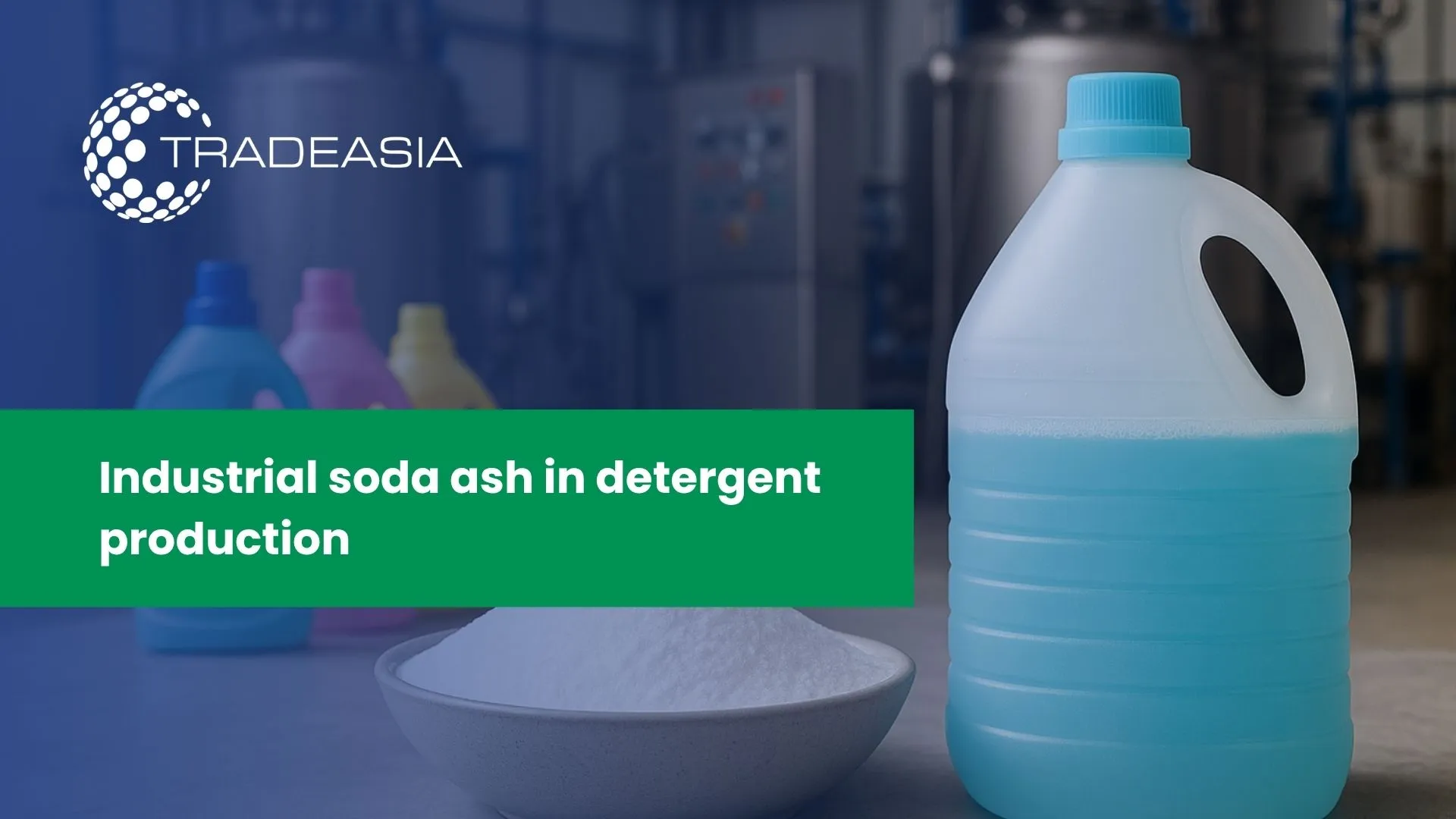
Introduction: Soda Ash Light in Cleaning Chemistry
Chemical Properties and Industrial Importance
Market Overview and Current Landscape
Rising Hygiene Awareness and Urbanization
Innovations in Detergent Formulation
Sustainability and Environmental Impact
Regional Market Insights
Technological Developments and Digitalization
Future Opportunities and Growth Forecast 2025 - 2035
Soda Ash Light, or Sodium Carbonate (Na₂CO₃), plays a fundamental role in the global soap and detergent industry. Known for its alkalinity and water-softening capabilities, it enhances surfactant efficiency, improves cleaning performance, and stabilizes pH levels.
The global cleaning industry relies heavily on this compound, which forms the backbone of numerous formulations from powder detergents to liquid soaps and industrial cleansers. Its low toxicity, affordability, and availability make it one of the most indispensable materials in chemical manufacturing.
Between 2025 and 2035, the demand for Soda Ash Light is forecast to increase steadily, fueled by population growth, hygiene awareness, and green manufacturing initiatives that emphasize sustainability and reduced environmental footprint.
Chemically, Soda Ash Light is a white, granular or powdery alkaline material that readily dissolves in water, creating a mildly basic solution. This makes it an effective builder in detergent formulations of substances that improve surfactant action by binding magnesium and calcium ions in hard water.
Industrially, Soda Ash Light is preferred over dense grades in detergent applications due to its superior solubility and fine particle size. Its applications extend beyond cleaning products to glass, textiles, and pulp & paper, but its role in cleaning remains the most commercially significant. The balance of alkalinity, stability, and cost efficiency has made Soda Ash Light irreplaceable in both industrial and household detergents, driving its steady inclusion in formulations worldwide.
In 2025, the global Soda Ash Light market is estimated to be worth USD 12.5 billion, projected to reach USD 17.8 billion by 2035, registering a CAGR of 3.6%. The soap and detergent industry consumes nearly 30–35% of total global output, positioning it as a key demand driver.
Major producing countries include China, the U.S., Turkey, and India, with China leading global capacity through the Solvay process and trona mining operations. These regions dominate international trade due to their cost-efficient production systems and access to raw materials.
While the demand is growing globally, Asia-Pacific remains the fastest-expanding market, contributing more than half of total consumption due to rapid urbanization, population growth, and the rise of organized detergent manufacturing.
The COVID-19 pandemic permanently reshaped consumer behavior, placing greater emphasis on hygiene, sanitation, and cleanliness. As a result, global consumption of soaps, detergents, and disinfectants soared, and that momentum continues into the forecast period.
Urbanization and rising living standards in developing countries are key drivers. As more people migrate to cities, household consumption of detergents and cleaning products rises proportionally, fueled by e-commerce availability and increased disposable income.
Countries in Asia, Africa, and Latin America are expected to sustain this growth trajectory, with multinational brands expanding their manufacturing bases closer to high-demand regions to optimize distribution and reduce logistics costs.
Technological innovation is redefining the detergent sector. Modern detergents must perform efficiently in cold water, consume less energy, and remain gentle on fabrics and skin. Soda Ash Light supports these innovations by maintaining pH stability and improving surfactant performance.
Manufacturers are integrating micro-granulated Soda Ash Light to enhance solubility, improve blending uniformity, and minimize dust formation during production. Additionally, new processes allow its integration into liquid and gel detergents, broadening its application scope. These innovations enable brands to create concentrated, efficient, and environmentally friendly products aligning with both performance and sustainability goals demanded by global consumers.
Sustainability is reshaping every stage of the Soda Ash Light value chain. Producers are investing in energy-efficient Solvay process upgrades, CO₂ capture technologies, and trona-based production methods that lower environmental footprints.
Eco-conscious consumers and global detergent giants like Unilever, Procter & Gamble, and Henkel are setting ambitious sustainability goals, requiring suppliers to provide raw materials with verified green credentials. Soda Ash Light’s production methods are evolving to meet these demands.
The adoption of renewable energy and circular economy models including waste reuse and closed-loop chemical recycling is expected to transform the Soda Ash Light market into a more sustainable, low-carbon industry by 2035.
Asia-Pacific
Asia-Pacific leads global consumption, accounting for over 50% of Soda Ash Light demand. Rapid industrialization in China, India, and Southeast Asia drives massive detergent production growth. Companies such as Tata Chemicals, GHCL, and Shandong Haihua are expanding capacity through greenfield and brownfield projects. Regional trade policies and logistics networks enhance export potential toward Africa and the Middle East. The increasing demand for branded household products and institutional cleaning supplies further fuels the region’s market share dominance in the coming decade.
North America & Europe
These mature markets focus on innovation and carbon neutrality. Producers like Solvay SA, Ciner Resources, and Genesis Alkali invest in process optimization, renewable integration, and digital manufacturing systems. Consumer awareness of sustainable detergents drives the use of low-impact soda ash. As Europe’s REACH and ESG frameworks tighten, compliant producers will gain strong competitive advantages.
Middle East, Africa & Latin America
Emerging markets in these regions are witnessing expanding detergent sectors fueled by demographic growth and improved hygiene infrastructure. Import dependence remains high, but local production is steadily growing. By 2035, these regions will account for 30% of incremental global demand, representing critical frontiers for capacity investment and trade partnerships.
The soda ash industry is embracing Industry 4.0 technologies. From AI-driven monitoring systems to digital twins for predictive control, manufacturers are enhancing energy efficiency and production precision. Process automation minimizes energy losses and improves yield predictability, crucial in an industry facing volatile energy prices. These advancements also improve traceability and compliance reporting, ensuring adherence to global environmental standards. The digital transformation is expected to increase production efficiency by up to 25% while reducing operational costs, making it a central pillar of competitive strategy by 2030.
Between 2025 and 2035, global Soda Ash Light consumption in the detergent sector is forecast to grow by over 40%, driven by population growth and improved living standards.
New investment opportunities will emerge in bio-based soda ash production, automated supply chains, and green hydrogen integration to power manufacturing. Strategic alliances between chemical producers and detergent giants will ensure long-term stability. Investors and policymakers emphasizing ESG compliance and green technology adoption will find the Soda Ash Light industry to be a strong contributor to global sustainability objectives.
The next decade will redefine the role of Soda Ash Light in the global detergent industry. From supporting sustainable hygiene to enabling low-carbon manufacturing, its relevance continues to grow.
Companies that invest in clean technology, digital transformation, and value-chain transparency will dominate the 2035 landscape. As consumers become more environmentally aware, the demand for eco-certified cleaning materials will reach record levels.
Ultimately, Soda Ash Light stands as a symbol of balance between industrial innovation and environmental stewardship, ensuring the world’s pursuit of cleanliness remains sustainable for generations to come. To learn more about sustainable sourcing and partnership opportunities for Soda Ash Light in the soap and detergent sector, contact Detergent Chemicals Asia.
We're committed to your privacy. Tradeasia uses the information you provide to us to contact you about our relevant content, products, and services. For more information, check out our privacy policy.


 English
 Indonesian
 简体字
简体字
 العربية
 Español
 Français
 Português
 日本語
日本語
 한국어
한국어
 Tiếng Việt