Explore our network of country and industry based websites to access localized information, product offerings, and business services across our group.
Log in to start sending quotation requests for any product.
Don't have an account? Sign Up Here
Home Sodium Tripolyphosphate (STPP) Market 2025-2035: Fueling the Future of Detergents
Trade Insights | Applications and Buyers | 19 December 2025
Introduction
Understanding Sodium Tripolyphosphate (STPP): The Detergent Powerhouse
Key Applications of STPP in the Modern Detergent Sector
Global Market Drivers and Demand Analysis (2025-2035)
Regional Market Outlook and Supply Chain Dynamics
Challenges, Regulations, and Future Alternatives
Conclusion
The global detergent industry stands as a cornerstone of modern hygiene and industrial cleaning, underpinned by a sophisticated chemistry that delivers performance, efficiency, and value. At the heart of this chemistry for decades has been Sodium Tripolyphosphate (STPP), an inorganic builder agent whose multifunctional properties have made it indispensable. As we look towards the period from 2025 to 2035, the market for STPP is poised at a critical juncture, shaped by evolving regulatory landscapes, regional demand shifts, and the continuous pursuit of cleaning efficacy. This article provides a comprehensive, long-form analysis of the Sodium Tripolyphosphate market, with a laser focus on its pivotal role within the detergent sector.
Understanding the trajectory of STPP demand is essential for stakeholders across the value chain, from chemical manufacturers and suppliers to detergent formulators and end-users. The market outlook is not merely a projection of volume and value but a narrative of technological adaptation, environmental policy, and regional economic development. We will delve into the specific applications that sustain demand, analyze the macroeconomic and industry-specific drivers, and assess the competitive landscape and future challenges. This analysis aims to equip industry professionals with the insights needed to navigate the coming decade of change and opportunity in the detergent chemicals space.
Sodium Tripolyphosphate (Na5P3O10) is a white, crystalline powder or granule that is highly soluble in water. Chemically, it is a sodium salt of the polyphosphate penta-anion. Its primary value in detergent formulations stems from its exceptional ability to sequester (bind) di- and trivalent metal ions, such as calcium (Ca²⁺) and magnesium (Mg²⁺), which are responsible for water hardness. This sequestration prevents these ions from interfering with the cleaning action of surfactants, thereby dramatically improving detergent performance in hard water conditions. Beyond this, STPP serves as a peptizing agent, helping to disperse and suspend soil particles to prevent redeposition on fabrics.
The specifications of commercial-grade STPP for detergents are critical. It typically comes in two primary forms: Phase I (high temperature form) and Phase II (low temperature form), with Phase I being more common in detergent granules due to its higher solubility and faster dissolution rate. Key quality parameters include phosphate content (usually 57% min as P2O5), bulk density, particle size distribution (crucial for ensuring uniform mixing in detergent powders), and pH of its solution. High-purity STPP with low heavy metal content is essential for consumer safety and product stability. Leading suppliers ensure consistency in these specifications to meet the rigorous demands of large-scale detergent production.
When compared to other builders like zeolites, citrates, or newer chelants like EDDS, STPP offers a unique combination of high sequestration power, cost-effectiveness, and contribution to alkalinity, which aids in soil removal. While environmental concerns have spurred the development of phosphate-free alternatives, no single alternative has matched the comprehensive performance-to-cost ratio of STPP in heavy-duty laundry and industrial cleaning applications, securing its ongoing relevance in specific markets and applications.
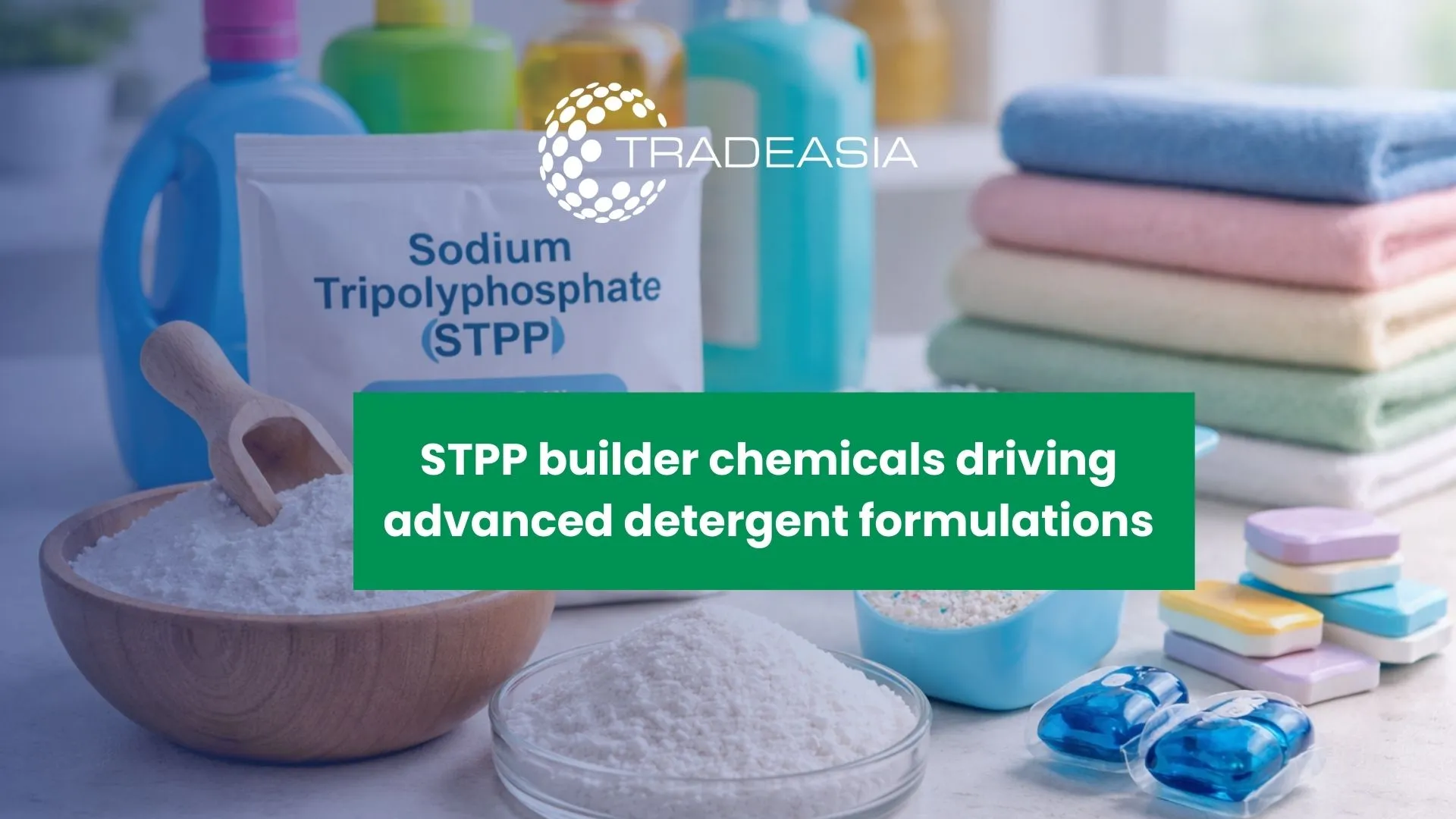
The application portfolio of Sodium Tripolyphosphate within the detergent industry is both broad and deeply integrated. Its most prominent use is in heavy-duty laundry powders, where it acts as the primary builder. In these formulations, STPP can constitute 10-30% of the total weight, working synergistically with surfactants, bleaches, and enzymes to deliver superior cleaning on heavily soiled fabrics, even in cold or hard water. Its role extends to preventing scale formation on washing machine components, thereby protecting appliance longevity, a significant value-add for consumers and manufacturers alike.
Beyond household laundry, STPP is a critical component in industrial and institutional (I&I) cleaning products. This includes formulations for dishwashing in commercial kitchens (machine dishwashing powders and tablets), laundry detergents for hotels and hospitals, and cleaners for the food processing industry. In automatic dishwashing detergents, STPP's ability to sequester hardness ions is vital for preventing spotty film on glassware and ceramics. Furthermore, it is used in certain liquid detergents and cleaners, though formulation stability requires careful management of its hydrolysis. The compound also finds use in bar soaps and scouring powders, showcasing its versatility.
In emerging economies, the demand for STPP is closely tied to the rapid growth of the synthetic detergent (syndet) market, which is displacing traditional laundry bars. As consumers upgrade to machine washing and seek higher-performance cleaning, the formulation of cost-effective, high-efficiency powders heavily relies on STPP. This trend is a primary demand driver in regions like Asia-Pacific and Africa, where water hardness is often high and consumer price sensitivity is significant.
The Sodium Tripolyphosphate market from 2025 to 2035 will be propelled by a complex interplay of drivers. Foremost is the global population growth and rising urbanization, particularly in Asia and Africa. Urban living correlates with increased adoption of washing machines and a higher frequency of cleaning, directly boosting the consumption of laundry detergents and, consequently, STPP. The expanding middle class in these regions demands higher-quality cleaning products, supporting the market for premium and performance-oriented formulations where STPP's efficacy is valued.
Another significant driver is the growth of the industrial and commercial cleaning sector. Post-pandemic emphasis on hygiene in healthcare, hospitality, and food service is expected to sustain long-term demand for institutional cleaners. Furthermore, the development of manufacturing and processing industries globally increases the need for specialized industrial detergents. Economic recovery cycles and infrastructure development projects also stimulate demand for cleaning chemicals in construction and maintenance. Real-world data from market research firms suggests a compound annual growth rate (CAGR) for the global STPP market in the range of 2-4% through 2035, with volume demand potentially exceeding 5 million metric tons by the end of the forecast period.
However, demand growth is not uniform. It is heavily moderated by regional environmental regulations concerning phosphate discharge. In regions with strict eutrophication controls, such as Western Europe and North America, demand is stable or declining in consumer detergents but persists in specific I&I applications. The key growth engines are unequivocally the less regulated, high-growth economies of South and Southeast Asia, the Middle East, and Africa, where the detergent market itself is expanding rapidly.
The regional landscape for the STPP market is sharply divided. The Asia-Pacific region, led by China, India, and Southeast Asian nations, is the undisputed consumption leader and will remain the primary growth engine through 2035. China is not only the largest consumer but also the dominant global producer and exporter of STPP, giving it significant influence over global prices and supply. India's market is experiencing explosive growth due to rising disposable incomes and the formalization of the detergent sector. Suppliers in this region, including major chemical conglomerates and specialized phosphate producers, are scaling up capacity to meet domestic and export demand.
In contrast, the North American and Western European markets are mature and constrained by phosphate bans in household laundry detergents. Demand here is specialized, focused primarily on automatic dishwashing detergents (where phosphate use is often still permitted or in professional lines) and industrial applications. The supply chain in these regions is consolidated, with a few key players servicing a stable, niche demand. Meanwhile, regions like the Middle East & Africa and Latin America present mixed pictures. The Gulf Cooperation Council (GCC) countries have growing detergent manufacturing bases, while Africa represents a future frontier with immense growth potential as market penetration increases.
The global supply chain is characterized by its reliance on phosphate rock and phosphoric acid. Fluctuations in the prices of these raw materials directly impact STPP production costs. Leading suppliers and manufacturers such as Innophos Holdings, Hubei Xingfa Chemicals Group, Chengxing Group, and Aditya Birla Chemicals have integrated operations to secure feedstock. For detergent manufacturers, securing a reliable supply from reputable chemical suppliers who can ensure consistent quality, timely delivery, and provide technical support for formulation is a critical strategic consideration. The competitive landscape favors suppliers with large-scale, efficient production and a global distribution network.
The single greatest challenge facing the widespread use of Sodium Tripolyphosphate is environmental regulation. Phosphates in wastewater are a major contributor to eutrophication—the over-enrichment of water bodies with nutrients, leading to algal blooms and oxygen depletion. In response, over 25 U.S. states and numerous countries, particularly in the EU, have enacted bans or severe restrictions on phosphate content in household laundry and dishwashing detergents. This regulatory pressure is a permanent market-shaping force and continues to expand to new regions as environmental awareness grows.
This challenge has spurred intensive research and development into phosphate-free builders. Zeolites (Type A), sodium citrate, sodium carbonate (soda ash), polycarboxylates, and newer biodegradable chelants like GLDA (Tetrasodium Glutamate Diacetate) are all used as full or partial replacements. However, each alternative comes with trade-offs. Zeolites are insoluble and can leave deposits; citrates are less effective in very hard water and more expensive; carbonate can be harsh on fabrics and machine parts. Most "phosphate-free" formulations often use a combination of these alternatives to approximate STPP's performance, usually at a higher raw material cost.
Looking to the future, the market will likely see a continued bifurcation. In regulated regions, STPP use will become increasingly specialized and confined to applications where alternatives are technically or economically non-viable. In growing, less-regulated markets, STPP will remain the builder of choice for the foreseeable decade. Innovation may also focus on enhanced wastewater treatment technologies (like phosphate recovery) that could mitigate environmental concerns, potentially altering the regulatory calculus in the long term. For detergent formulators, the strategy involves dual expertise: mastering phosphate-based formulations for growth markets and leading phosphate-free innovation for regulated ones.
The outlook for the Sodium Tripolyphosphate (STPP) market from 2025 to 2035 is one of nuanced growth and regional divergence. While environmental regulations in developed economies have capped its use in consumer applications, the compound's unparalleled cost-performance ratio ensures its enduring dominance in the fast-growing detergent markets of Asia-Pacific, Africa, and other emerging regions. Its critical functions as a water softener, soil suspender, and process aid in detergent manufacturing are not easily replicated, securing its position in the global detergent chemicals supply chain for the next decade at minimum.
For industry stakeholders, from suppliers of STPP to detergent producers, the path forward requires agility and strategic insight. Success will depend on a deep understanding of regional regulatory trends, investment in supply chain efficiency, and the flexibility to serve both phosphate-dependent and phosphate-free market segments. The story of STPP is a testament to the complex interplay between industrial chemistry, market economics, and environmental stewardship. As the detergent sector evolves to meet the demands of a growing, urbanizing global population, Sodium Tripolyphosphate will undoubtedly remain a key, if selectively deployed, actor in the narrative of clean. To evaluate STPP supply options, regulatory considerations, or formulation support tailored to your target markets, you can connect with our team through the Contact Us page.
We're committed to your privacy. Tradeasia uses the information you provide to us to contact you about our relevant content, products, and services. For more information, check out our privacy policy.


 English
 Indonesian
 简体字
简体字
 العربية
 Español
 Français
 Português
 日本語
日本語
 한국어
한국어
 Tiếng Việt