Sodium laureth sulfate (SLES) is produced primarily across China, India, and Western Europe, with China holding the largest share of both ethoxylation capacity and downstream surfactant manufacturing. The critical upstream constraint in 2026 is not SLES production lines themselves, but access to ethylene oxide (EO) and lauryl alcohol, the two co-feedstocks whose simultaneous cost pressure is compressing margins and intermittently tightening availability. Buyers sourcing SLES under spot or semi-term arrangements should expect continued price volatility tied to EO plant turnarounds and palm kernel oil price cycles, and should plan for a minimum 6–8 week buffer stock.
Why the SLES Supply Chain Bottleneck Is Upstream, Not at the Reactor
SLES — sodium laureth sulfate, also known as sodium lauryl ether sulfate — is not a supply-constrained product at the formulation stage. The ethoxylation units that produce it are well distributed across Asia, Europe, and North America. The constraint in 2026 is structural and sits two steps upstream: in the cost and availability of ethylene oxide and C12–C14 fatty alcohols, both of which are exposed to independent and sometimes simultaneous price shocks.
SLES is produced by sulfating an ethoxylated lauryl alcohol. The process requires three inputs: lauryl alcohol (derived from palm kernel or coconut oil), ethylene oxide (derived from ethylene via silver-catalyst oxidation), and sulfuric acid (typically cheap and widely available). When either of the first two inputs tightens — through feedstock volatility, refinery turnarounds, or weather-driven agricultural supply disruptions — SLES production economics deteriorate quickly, and spot availability narrows in the markets most dependent on short-term sourcing.
In 2025, SLES prices reached 834 USD/MT in the U.S. and 945 USD/MT in China by June, per IMARC pricing data, with Germany posting 1,326 USD/MT — a significant premium driven by electricity costs and EO logistics constraints. These regional gaps reflect structural differences in feedstock exposure and are not short-term anomalies. They define the procurement risk map buyers need to understand entering 2026.
SLES Market Size and Demand Trajectory
| Metric | 2024/2025 Estimate | 2034 Projection | CAGR |
|---|---|---|---|
| Global SLES volume | ~2.38–2.51 MT | ~3.47 MT | 4.3% |
| Global SLES value | ~USD 4.48–4.62B | USD 5.87–6.36B | 3.2–3.4% |
| SLES 70% grade share | 46.3% of market | Growing | Ongoing |
| Asia-Pacific volume share | ~33.8% | Dominant | Highest CAGR |
Sources: IMARC Group, Credence Research, Market Research Future (2025 estimates)
Demand is structurally tied to three end-use categories: personal care (shampoos, body wash, facial cleansers), household detergents (laundry and dishwashing), and industrial cleaners. Of these, personal care is the most price-resilient and currently the fastest-growing, driven by rising per capita spending in India, Southeast Asia, and Sub-Saharan Africa.
The 70% active matter grade dominates commercial use because it allows formulators to dilute to specification at point of manufacture, reducing water-in-transit costs. This grade is the primary traded product and the reference price for procurement benchmarking. The 28% grade is favored in regions with less sophisticated blending infrastructure and by mid-tier consumer goods manufacturers seeking ready-to-use inputs.
Asia-Pacific accounts for over 33% of global volume in 2024 and is the fastest-growing consumption zone. China and India drive most of that growth, with Southeast Asian FMCG expansion adding to incremental demand. This geographic concentration of both supply and demand creates circular dependencies: Chinese SLES producers serve Chinese FMCG manufacturers, but they also supply export markets — and when domestic demand accelerates or EO supply tightens internally, export availability shrinks.
The Feedstock Architecture: Two Inputs, Two Independent Risk Exposures
SLES production depends on two primary feedstocks that have no substitutes within the current manufacturing process.
Lauryl Alcohol: Palm Kernel Exposure and Southeast Asian Concentration
Lauryl alcohol — specifically C12 fatty alcohol — is derived from the hydrogenation of methyl esters extracted from palm kernel oil (PKO) or coconut oil. Indonesia, Malaysia, and the Philippines produce the dominant share of the global C12–C14 fatty alcohol supply, with Southeast Asian oleochemical nameplate capacity exceeding 23 million tonnes per annum as of 2025, per Mordor Intelligence data.
The structural risk is feedstock concentration. PKO feedstock represents up to 70% of natural fatty alcohol production cost, and palm-kernel-oil prices surged 75% year-on-year to USD 2,063 per tonne in March 2025 after El Niño trimmed yields across Indonesia and Malaysia. Manufacturers reported 15–20% year-on-year increases in production costs in 2023 and early 2024, with limited ability to hedge: only approximately 30% of oleochemical firms lock in PKO prices through forward purchase agreements, leaving the majority exposed to intra-year swings that have historically reached 40%.
An additional regulatory layer has emerged. The EU Deforestation Regulation, which came into force in 2024, requires documented supply chain traceability for palm-derived products entering EU markets. Southeast Asian fatty alcohol producers are navigating this compliance requirement while simultaneously back-integrating into PKO crushing to improve feedstock security — a strategy that reduces one risk while increasing another, since it deepens exposure to EUDR scrutiny.
For buyers of SLES, the practical consequence is that C12 fatty alcohol costs now carry a geopolitical and regulatory tail risk that did not exist at this magnitude five years ago. When PKO yields fall in Indonesia or Malaysia, lauryl alcohol prices in China and Germany move within 4–6 weeks. SLES prices follow.
Ethylene Oxide: Platform Chemical Competition and U.S. Turnaround Exposure
Ethylene oxide (EO) is the second critical input. Produced by the catalytic oxidation of ethylene over a silver catalyst, EO competes for the same ethylene feedstock used in polyethylene, PVC, MEG, and polyester production. Globally, ethylene glycol manufacturing absorbs approximately 75% of total EO production, which means SLES and ethoxylate manufacturers are structurally minor consumers competing against a much larger downstream sector for priority allocation during tight supply periods.
China has added approximately 10 million tonnes of new ethylene capacity in 2025 alone, per SunSirs and Blooming Global data, pushing total capacity to around 62 million tonnes per annum. BASF's 1 million tonne ethylene complex in Zhanjiang commenced production in November 2025, with downstream EO and diethylene glycol units attached. China's EO capacity additions are expected to lead globally through 2028, per GlobalData's capacity pipeline analysis.
However, Chinese EO capacity expansion does not directly translate into cheaper or more available EO for SLES ethoxylation. By 2025, EO prices in China's value chain hit decade-low levels across most derivatives — but the price compression was concentrated in ethylene glycol, which is coal-chemical driven and experiencing severe oversupply. EO for surfactant ethoxylation, a smaller and less commoditized downstream application, remained subject to utilization volatility. Uneven capacity utilization rates among upstream Chinese EO producers continued to drive pricing inconsistency in China's SLES market through mid-2025.
In North America, the U.S. EO market entered 2025 with a heavy scheduled maintenance calendar. At least several major producers scheduled turnarounds between February and June 2025, ranging from two weeks to 45 days, per ChemAnalyst. These turnarounds constrained Gulf Coast SLES plant supply through Q2, contributing to the 834 USD/MT U.S. price level observed in June 2025. The U.S. Gulf Coast — home to Stepan Company's Pasadena, Texas alkoxylation plant, expanded in 2022 — remains the primary domestic SLES production hub, and any EO supply disruption in that corridor translates directly into SLES availability and pricing.
European EO faces structurally different pressure. European ethylene cracker utilization rates fell to approximately 75% by end-2024 — a historic low, according to S&P data — with 4.3 million tonnes of European cracker capacity expected to exit between 2025 and 2027 as SABIC, Dow, and Shell reposition their European chemical strategies. BASF and Evonik are the primary European EO-to-ethoxylate players, and both face structurally higher electricity costs versus Asian competitors. Germany's SLES price premium (1,326 USD/MT vs. China's 945 USD/MT in mid-2025) directly reflects this energy cost differential embedded in EO production.
Where SLES Is Made: Production Geography and Producer Landscape
| Region | Key Producers | Production Role | EO Source |
|---|---|---|---|
| China | BASF (Zhanjiang), Sinopec affiliates, Zanyu Technology | Dominant volume, largest single market | Domestic EO, growing EO capacity |
| India | Galaxy Surfactants, Godrej Industries, Stepan India JV | Major Asia-Pacific supplier, export hub | Imported EO, some domestic |
| Europe | BASF (Germany/Belgium), Clariant, Evonik, Nouryon | Premium grades, bio-SLES, REACH compliance | Regional EO, structurally higher cost |
| North America | Stepan Company (Pasadena, TX), Huntsman | Domestic U.S. market + some LatAm | Gulf Coast EO |
| Southeast Asia | KLK Oleo, Emery Oleochemicals, regional producers | Integrated oleochemical producers | Fatty alcohol integrated, buy EO |
China is the world's largest SLES production hub and the largest consumer. More than 60 manufacturers of washing, care, and cleaning agents operate in the country, per Mordor Intelligence data, though production is heavily concentrated among larger integrated chemical players. China is also a major SLES exporter, primarily to Southeast Asia, South Asia, and the Middle East.
Galaxy Surfactants (India) is one of the globally significant dedicated surfactant producers, operating integrated facilities with capacity for both personal care and home care SLES grades. Godrej Industries serves primarily the domestic Indian market and certain export corridors. India's SLES capacity is scaling with domestic FMCG demand growth: the Indian household cleaners market, valued at USD 10.35 trillion in 2024 by IMARC's domestic scaling, is growing at a projected 15% CAGR through 2033, pulling surfactant demand upward.
In Europe, BASF's Texapon N 70 — formulated at 68–73% active content — is an industry benchmark product for the personal care SLES market. BASF and Evonik are simultaneously investing in green ethoxylation technologies, with Croda and BASF both developing EO units that use bio-based ethylene oxide derived from sugarcane ethanol or corn, targeting the EU premium personal care market where sustainability documentation is a procurement requirement.
Ethoxylation Capacity: Where the Real Bottleneck Lies
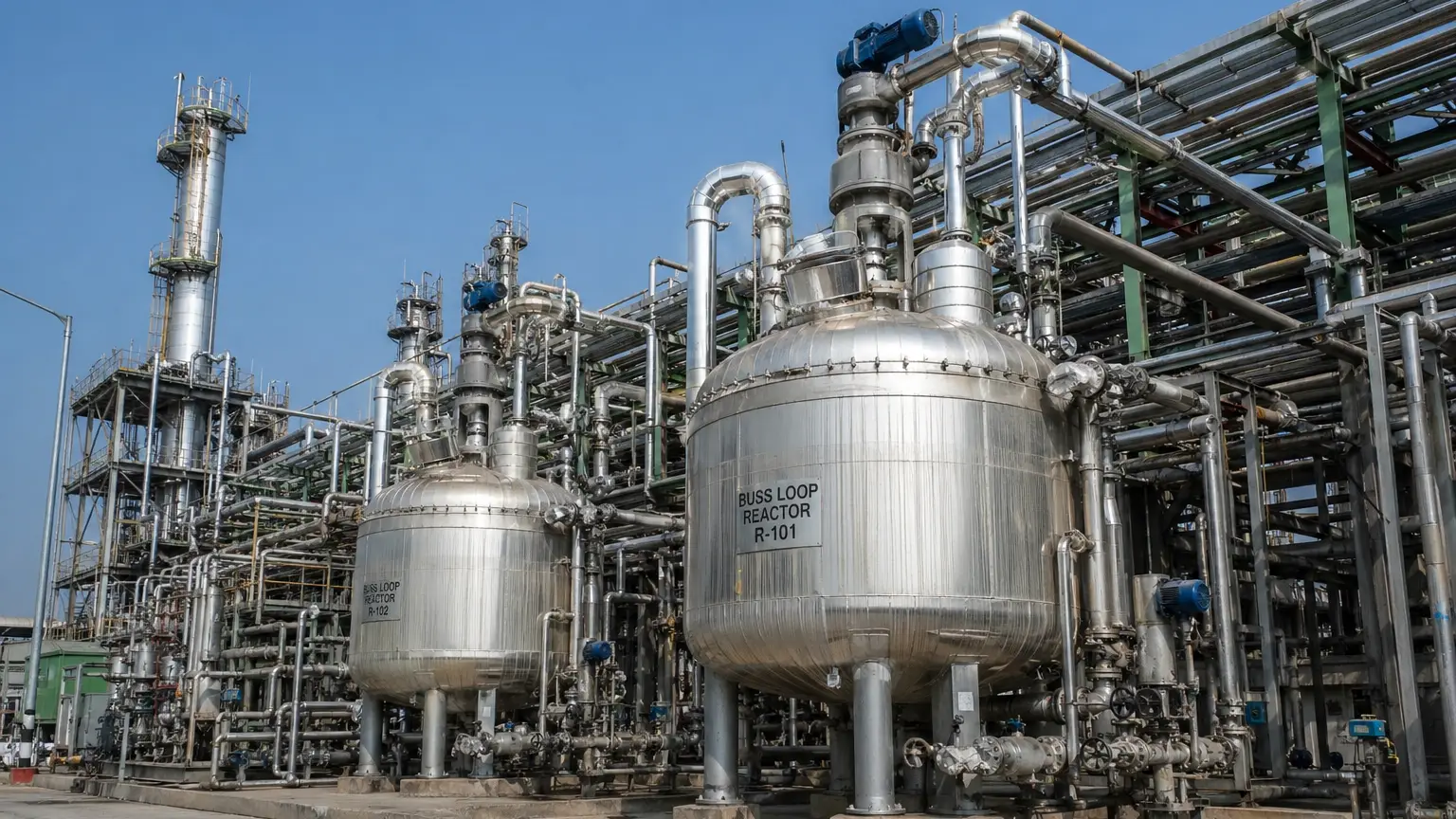
Ethoxylation is the key value-adding step in SLES production: it is the reactor stage where EO is added to lauryl alcohol under pressure and alkaline catalyst conditions at 120–180°C to produce the ethoxylated fatty alcohol intermediate, which is then sulfated to SLES. Modern ethoxylation plants use BUSS LOOP reactor technology — a continuous three-stage process with nitrogen-blanketed reactors required to prevent EO ignition risk.
The safety requirements for ethoxylation are not trivial. The January 2020 ethoxylation reactor explosion at IQOXE's facility near Tarragona, Spain — which killed three people and sent debris across a 2.5-kilometer radius — illustrates the consequence of process failure. This incident removed Spain's only EO producer (140,000 tonnes/year capacity) from the market and reshaped European insurance and permitting conditions for ethoxylation facilities. New ethoxylation capacity in Europe now faces higher permitting barriers and insurance cost burdens, which effectively raises the capital cost of capacity additions in OECD markets relative to China and India.
The bottleneck in 2026 is therefore not a shortage of SLES reactor lines globally, but a mismatch in where new ethoxylation capacity is being added (China, Asia broadly) versus where demand growth is accelerating (India, Southeast Asia, Africa). Chinese surplus EO and ethoxylation capacity does not automatically serve Indian or African buyers efficiently, because physical distribution of SLES — a high-water-content, corrosive liquid product — requires either tank trucks, ISO tanks, or specialty tankers, and logistics costs are significant.
Stepan Company's 2022 capacity expansion in Pasadena, Texas added alkoxylation capacity into the U.S. corridor. In Asia, GlobalData tracks 5.79 million tonnes of new EO capacity from 14 planned or announced projects across Asia by 2028, with the largest single addition being BASF's 0.66 mtpa Zhanjiang EO plant — which commenced operations in 2025. Iran's petrochemical sector is also adding EO capacity through Bushehr Petrochemical Company (0.40 mtpa, Assaluyeh), though sanctions-related market access constraints limit how much Iranian EO enters global surfactant supply chains.
SLES Trade Routes and Logistics Profile
SLES 70% is a water-based liquid with a density slightly above water and corrosive handling requirements. It does not have the volatility or explosion risk of EO itself, but it requires stainless steel or lined vessels for storage and transport. The primary trade logistics profile:
By sea: ISO tank containers (20-foot, 24,000-liter capacity) for inter-regional trade; chemical tankers for bulk parcels above 500 MT. Main export corridors from China: Tianjin, Shanghai, and Guangzhou to Southeast Asian, South Asian, and Middle Eastern receivers. From Europe: Rotterdam and Hamburg to North Africa and West Africa buyers.
By road/rail: Domestic distribution in major markets (China, India, U.S.) via road tankers or intermediate bulk containers (IBCs). Road tanker delivery is the standard in India for Galaxy Surfactants' domestic clients; in China, rail is used for longer inter-provincial supply movements.
Freight sensitivity: ISO tank freight rates for liquid chemicals tracked Red Sea disruption closely through 2024 and into 2025. Buyers in East Africa and the Middle East sourcing from Chinese SLES producers faced rerouting via the Cape of Good Hope, adding 10–15 days transit time and approximately 15–25% cost uplift versus pre-Houthi baseline Red Sea routing.
Supply Risk Assessment
| Risk Factor | Severity | Trigger Scenario | Historical Precedent |
|---|---|---|---|
| PKO price shock (lauryl alcohol) | HIGH | El Niño or La Niña yield reduction in Indonesia/Malaysia | March 2025: PKO +75% YoY |
| EO turnaround season (North America) | MEDIUM-HIGH | Simultaneous Gulf Coast maintenance Feb–June | Q1–Q2 2025 supply tightening |
| European cracker shutdowns | MEDIUM | Further capacity exits; energy price spike | 2021–2022 European energy crisis |
| EUDR compliance disruption | MEDIUM | Stricter enforcement of palm traceability for EU-bound SLES | Regulation in force since 2024 |
| China EO oversupply correction | LOW-MEDIUM | EO price collapse triggers producer cutbacks, reducing ethoxylate output | Decade-low EO derivatives pricing in 2025 |
| Sulfate-free consumer trend | LOW (structural) | Accelerated reformulation by FMCG majors reduces SLES demand share | P&G, Henkel reducing SLES concentration |
The most underappreciated risk in 2026 is the EUDR compliance trajectory. Buyers sourcing SLES for EU-destined personal care formulations now need documentation confirming that the palm kernel oil in their fatty alcohol supply chain was not produced on land deforested after December 2020. This is a supply chain documentation burden, not a product quality issue — but it can trigger order delays, sourcing changes, or premiums for certified-sustainable grades. BASF has documented 95% of its 441,000 tonnes of palm footprint to the mill level, with all volume RSPO certified; Galaxy Surfactants and Godrej Industries have similar certification programs underway, but not all Asian producers are yet compliant.
Procurement Strategy for SLES Buyers in 2026
For procurement teams buying SLES at volume, the structural picture in 2026 presents three actionable insights:
1. Do not treat Chinese origin SLES as interchangeable with EUDR-clean origin for EU-destined goods. Buyers supplying EU personal care brands need to audit whether their SLES supply chain carries documented palm traceability. Chinese producers vary widely in certification status; buying through a European distributor or a certified-origin supplier (BASF, Evonik, Galaxy Surfactants with RSPO documentation) is the lower-risk route for this end market.
2. Manage the EO turnaround calendar in North America. The February–June maintenance window for U.S. EO and surfactant plants is now a repeating annual tightening event. North American buyers who lock in Q1 and Q2 SLES volume on term contracts in Q4 of the prior year will consistently outperform spot buyers who enter the market during the turnaround season.
3. For Asia-Pacific and Middle Eastern buyers, the 2026 procurement opportunity lies in the Chinese EO oversupply window. China's decade-low EO and ethoxylate prices through 2025 created a period of favorable SLES pricing from Chinese origin. This window narrows as coal-based EO oversupply is absorbed by 2027–2028 and Chinese domestic SLES demand continues growing. Buyers with flexibility to establish 12-month term contracts with Chinese or Indian SLES producers in 2026 are locking in below-cycle pricing before the structural rebalancing.
Frequently Asked Questions
Q: Who are the largest producers of SLES globally?
A: BASF (Germany/China Zhanjiang), Stepan Company (U.S.), Galaxy Surfactants (India), Godrej Industries (India), Huntsman, Evonik, Clariant, and Nouryon are among the leading merchant producers. China's domestic production market includes more than 60 SLES manufacturers, with capacity concentrated among integrated chemical players linked to Sinopec and BASF's Zhanjiang Verbund complex. Asia-Pacific collectively accounts for approximately 33–35% of global SLES volume.
Q: What feedstocks go into SLES production, and where do they come from?
A: SLES requires two primary feedstocks: lauryl alcohol (C12 fatty alcohol, derived from palm kernel oil in Indonesia/Malaysia or coconut oil in the Philippines) and ethylene oxide (produced from ethylene via silver-catalyst oxidation, with global capacity of approximately 36+ million tonnes). Indonesia and Malaysia together provide the dominant share of C12 fatty alcohol globally. EO is produced in China (largest growing capacity), the U.S. Gulf Coast, and Europe (contracting capacity).
Q: What are the main supply chain risks for SLES?
A: The two primary risks are palm kernel oil price volatility — which transmits into lauryl alcohol costs within 4–6 weeks of a PKO price move — and ethylene oxide turnaround-driven supply tightness, particularly in the U.S. during Q1–Q2 maintenance season. The EUDR compliance requirement adds a third structural risk for buyers supplying EU markets: undocumented palm supply chains may face order delays or market access issues.
Q: How is SLES transported internationally?
A: SLES 70% moves by ISO tank container for most inter-regional trade, or by chemical tanker for bulk parcels. Key export corridors from China run through Tianjin, Shanghai, and Guangzhou to Southeast Asia, South Asia, and the Middle East. European exports use Rotterdam and Hamburg. Red Sea disruption since late 2023 has pushed China-to-Middle East SLES routing around the Cape of Good Hope, adding transit time and cost for buyers in that corridor.
Q: How do large buyers typically source SLES?
A: Large FMCG manufacturers (Unilever, P&G, Henkel) typically source SLES on annual or multi-year term contracts directly from major producers, sometimes with index-linked pricing tied to EO and fatty alcohol benchmarks. Mid-tier formulators source through chemical distributors, often on quarterly or semi-annual pricing agreements. Spot purchasing is common in Asia but carries elevated price volatility risk during EO turnaround seasons and PKO price spikes.